


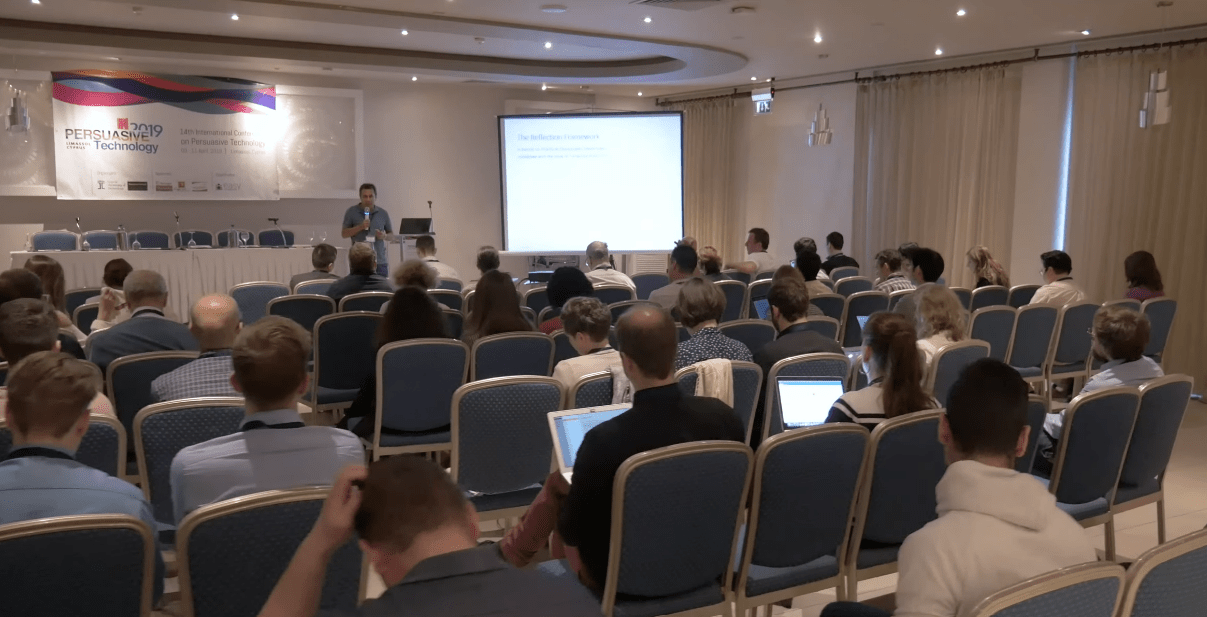
A small but expanding group of researchers has been coming together every year for twenty-one years to pose the difficult question of how much technology should be permitted to influence human behavior.
Hakodate is located on the southernmost point of Hokkaido, an island more commonly associated with seafood and ski slopes than with scholarly gatherings. The harbor is lined with historic brick warehouses from the Meiji period, and the ruins of a nineteenth-century fort still stand on the hills above the city, giving it a multi-layered, leisurely feel. On the surface, it seems like a strange location to bring together some of the most brilliant behavioral scientists in the world. However, the 21st International Conference on Persuasive Technology was held at Future University Hakodate in early March 2026, and by most accounts, the venue was ideal for the discussion. Discussing the morality of digital influence from within a city that has a long history of adapting to change without losing its identity seems appropriate.
When PERSUASIVE 2026 first began in Eindhoven back in 2006, it would have seemed unlikely that researchers from twenty countries across five continents would attend. The idea that computers, software, and digital systems could be purposefully created to alter people’s attitudes and behaviors was the basis for the relatively small inaugural event, which was organized around a concept that BJ Fogg at Stanford had been developing for almost ten years. At the time, the majority of the world was unaware of it. Twenty years later, the issues it brought up are at the heart of some of the most contentious discussions in the design community, congressional hearings, and product liability cases.
Compared to most academic events, the Persuasive Technology conference is unique because of its openly interdisciplinary nature. With detours into public health, environmental science, game design, and increasingly law, the attendee list resembles a hybrid of a computer science department and a psychology faculty. Papers on AI-personalized health interventions, research on dark patterns in mobile apps, and studies on how smart voice assistants affect decisions differently based on the listener’s age and gender were all included in the 2026 program. The ethics of how digital systems present informed consent in medical settings, particularly with regard to eye donation, was the subject of one winning paper. This topic feels both specialized and, when you sit down with it, uncomfortably relevant to almost every terms-of-service agreement that anyone has ever clicked through without reading.
The gradual accumulation of evidence that persuasion and manipulation are not always easy to distinguish may be the conference’s most significant contribution over its twenty-one editions. With the kind of empirical rigor that design ethics discussions have long lacked, Kiemute Oyibo’s 2026 best paper explored the perceived intrusiveness and darkness of dark patterns. These are no longer theoretical issues. When determining whether app interfaces amount to unfair commercial practices, courts in California and the EU have started referencing behavioral science literature. Years later, the research that was presented in rooms such as those at Future University Hakodate often reappears in legal briefs.
Perhaps unintentionally, the conference has also served as a conscience for the tech sector. Academic conferences seldom operate in a boisterous or combative manner. However, as the sessions progress, it becomes clear that many of the attendees are genuinely uneasy about the direction the field has taken. Bioethics frameworks are being borrowed by a number of researchers working on persuasive health applications. Others have advocated for a more distinct line to be drawn between encouraging people to make decisions that will benefit them and pressuring them to make decisions that will benefit a platform. It turns out that making that distinction is more difficult than it seems.
The 8th International Conference on Activity and Behavior Computing and PERSUASIVE 2026 were co-located, which sparked discussions between researchers who study how bodies move through space and those who study how minds react to digital cues. At the boundaries of both communities, some of the most fascinating conversations took place. The next edition will take place in Santiago de Compostela, Spain, another city with a lengthy history and, presumably, a similarly reflective atmosphere for the issues the field keeps coming back to.
After twenty-one years, it’s still unclear if persuasive technology will eventually prove to be a force for good or a collection of strategies that got out of control before anyone figured out the safeguards. Regarding that uncertainty, the Hakodate researchers were not naive. Some of them created the tools found in the apps that are currently being sued for addiction. The same ideas have been used for years by others to help people manage chronic illness, cut down on food waste, and engage in more regular exercise. The conference maintains both of those realities simultaneously without finding a solution, which is, in a sense, a more honest stance than most organizations are able to take.
