


Watching a great TED Talk can be almost disorienting. Eighteen minutes later, you’re texting friends a link and changing your perspective on something you’ve believed for years after sitting down with a modicum of curiosity and perhaps some skepticism. Is there a formula here? It occurs frequently enough to warrant inquiry. If so, who made the rules?
As it happens, there most likely is one. The psychological architecture underlying the most popular talks on the platform has begun to be mapped by researchers, communication specialists, and a few exceptionally open speakers. What they’re discovering is more mechanical and less magical than the TED brand suggests, which can be comforting or a little unsettling depending on your point of view.
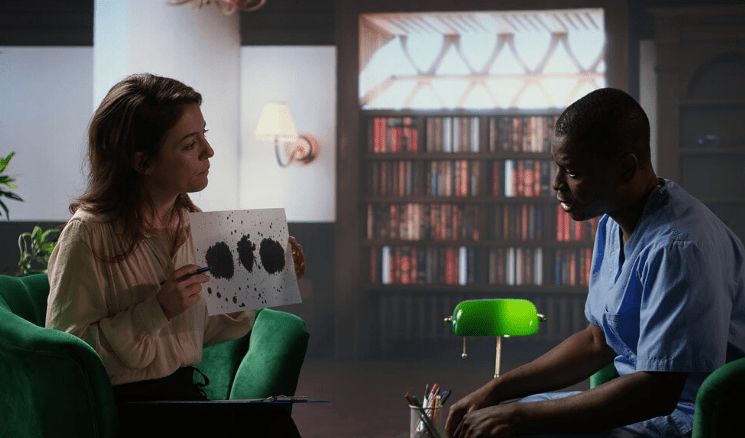
At TED2020, Neal Katyal, who has argued cases before the U.S. Supreme Court more times than most lawyers can recall, made a statement that many found to be counterintuitive. He contended that persuasion is actually hampered by confidence. People are moved by empathy. It seems that knowing when to stop and listen is more important than projecting certainty when standing in a wood-paneled courtroom. This could be the reason why so many business presentations, which are based solely on polish and authority, fall flat.
This is further complicated by Niro Sivanathan, an organizational behavior instructor at London Business School. According to his research on what he refers to as the “dilution effect,” adding point after point of evidence actually makes an argument weaker rather than stronger. Coherence is what audiences process, not volume. It seems that most people who construct arguments do the exact opposite of what is effective, overpowering strong points with a deluge of counterarguments.
The most popular TED talks seem to grasp the unique rhythm of trust-building almost instinctively. Julian Treasure, who has spent years researching the impact of sound on human behavior, highlights something as unglamorous as the pause. The willingness to let a thought linger in the air and the silence that follows a sentence both register emotionally before the brain has a chance to evaluate them. Effective speakers slow down and lower their voice. The crowd leans in. It is both a psychological and a physical phenomenon.
Viewers’ long-held opinions are beginning to be reflected in academic analysis. A 2025 study that looked at the rhetorical structure of TED talks and was published in the Journal of Posthumanism discovered recurring patterns: pathos, ethos, and logos alternating with literary devices like personification and metaphor. The presenters are doing more than just imparting concepts. They are constructing emotional containers for those concepts, and the containers themselves are just as important as the contents.
All of this takes on an unexpected dimension thanks to Sally Kohn’s experience at Fox News. As a progressive pundit in a very conservative media setting, she found that acknowledging the viewpoint of her audience before presenting her own argument significantly reduced ideological conflict. She discovered that shared emotional ground transcends political boundaries in ways that are difficult for pure argument to achieve.
Observing all of this, it’s difficult to ignore the fact that TED has developed a persuasion formula that is more about identity than information, whether on purpose or not. Before they ask you to change, the best conversations make you feel understood. Perhaps the oldest trick in the book is that one. All it took to package it so neatly was a worldwide stage and a red circle on the ground.
