


You’ll notice something if you stroll through any of Cambridge’s older neighborhoods on a weekday afternoon. Individuals gravitate toward particular corners. They stay close to certain benches. Despite the fact that no one practiced anything, they cross streets in patterns that appear to be practiced. Although this type of thing has been known to urban planners for decades, a smaller, more unusual concept has emerged around it at the MIT Media Lab. The Persuasive Cities project, headed by researcher Agnis Stibe, is based on the straightforward but unsettling idea that since our surroundings are already influencing our behavior whether we want it or not, it might be time to intentionally create that influence.
The project is part of the Media Lab’s larger urban work, which has always tended to be more inquisitive than cautious. The team claims that well-designed spaces have the power to subtly influence people to adopt new behaviors without the need for commands or lectures. Reading their writing gives the impression that they no longer consider cities to be places. They view them as feedback loop systems in which an individual, a behavior, and an environment are in a state of perpetual negotiation. It is a perspective that has elements of both traditional architecture and behavioral science, but it is not entirely a part of either.
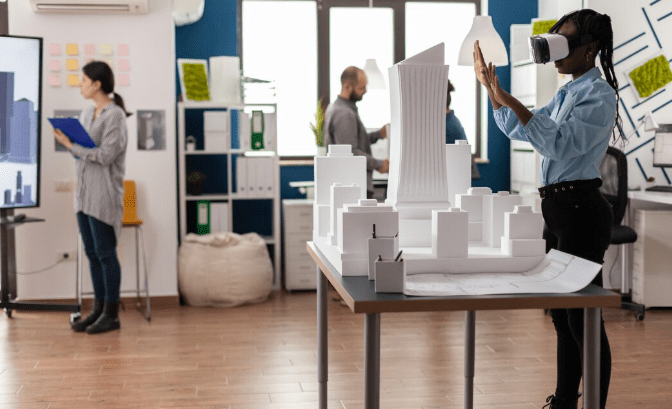
The theory is not what makes the project intriguing. They are attempting to test it in particular locations. The researchers describe interactive feedback channels that attempt to change attitudes at scale, socially engaging spaces intended to encourage entrepreneurship, and outdoor sensors intended to change how people move through a city. Until you see the tiny version of it, it seems abstract. The number of neighbors who used public transportation that week is displayed on a digital display next to a bus stop. A redesigned plaza where strangers sit close to one another. It’s subtle, but when taken as a whole, it can rewire a routine.
Stibe has discussed these concepts in academic forums and TEDx talks, and his framing leans toward optimism. He wants cities to promote more socially conscious, sustainable, and health-conscious behavior. On principle, it is difficult to disagree with that. Even so, it’s difficult to ignore the more profound query that lies beneath it all. Who determines what conduct a city ought to promote? A local government? A lab for research? A private developer whose sidewalk is equipped with sensors? The Persuasive Cities team doesn’t avoid the influence question, but their response seems incomplete—possibly unavoidably so.
These days, there’s a reason why this kind of research keeps coming up. Old planning playbooks aren’t keeping up with the demands on cities, changing mobility patterns, and tightening climate goals. Once a niche area of study, behavioral nudges have found their way into building codes, public health initiatives, and transit policy. Although it fits into that larger trend, Persuasive Cities takes it a step further by viewing the city as the intervention rather than the setting. It’s still unclear if that goes beyond pilot projects.
Observing this from a distance, it’s remarkable how silently it’s taking place. There aren’t any grand announcements or showy launches. Just researchers tracking how a feedback display affects recycling rates over a month, or how a redesigned corner affects foot traffic. Little experiments that add up gradually. The goal is to change human behavior on a societal scale, which sounds huge, but the techniques are remarkably modest. Perhaps that’s the idea. A speech does not transform a city. They alter when a bench is moved, a sensor is added, or a line is painted. Eventually, people start to follow.
