


You might initially miss it if you stroll through a crowded Singaporean transit station late on a weeknight. As the platform fills, a long strip of colored light that runs across the ceiling changes from a serene blue to a warmer amber. The majority of commuters don’t look up. They are not required to. Even so, they change their pace almost instinctively, as though the structure itself were pushing them. This is the more subdued aspect of the smart city debate, and it is gaining traction more quickly than most people are aware.
Municipalities in parts of North America, Europe, and East Asia have begun making significant investments in what designers refer to as ambient displays. These aren’t the enormous screens for advertisements you see in Shibuya or Times Square. They are more subdued devices that blend in with floors, walls, lampposts, and even bus shelters to influence crowd movement without ever giving instructions. This is a pulsating light. There was a change in color. The notion that the environment itself can speak for itself comes from years of scholarly research on ambient intelligence.
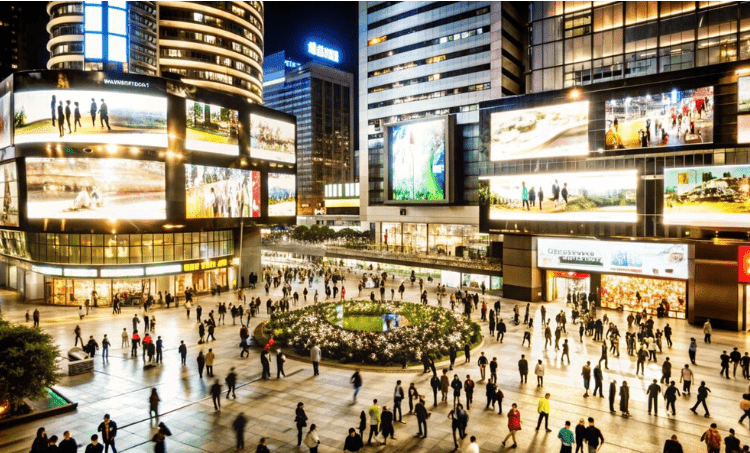
This may be the most underappreciated trend in urban planning at the moment. Walking through cities like Seoul or Helsinki gives you the impression that the city is responding to you. For years, scholars such as Norbert Streitz have maintained that smart spaces ought to enhance human intelligence rather than merely increase surveillance. That distinction is important. A camera observes. An ambient display extends an invitation. Theoretically, there is a huge difference, but in reality, the distinction is more hazy than officials would like to acknowledge.
Consider London’s experiments with big football games. In order to reduce traffic jams without a single steward yelling over a loudspeaker, local councils have tested floor lighting near tube stations that gently glows in the direction crowds should walk. Officials claim it is effective. Although most commuters are unaware that the system is in place, they appear to agree. The point—and possibly the issue—is that invisibility.
Because this is where it gets uncomfortable. The issue of consent becomes unclear when infrastructure begins directing behavior without anyone noticing. This was referred to as the metropticon in a 2016 Fordham Law Review article. It is a hyperconnected city where privacy is subtly undermined by the amiable hum of effective design. Crowd control seems harmless until you realize that the same sensors that count heads can also track who you entered with. Municipal authorities in cities like Barcelona have resisted, insisting on privacy-by-design frameworks prior to the launch of any new displays. Some have not exercised the same caution.
The business side is flourishing. These days, ticketing platforms post instructions on AI camera feeds and real-time crowd dashboards. Vendors pitch city governments on dimmable LED corridors, presence sensors, even floor tiles that change colour as foot traffic builds. The pitch is always the same. safer gatherings. more fluid flow. fewer occurrences. And honestly, after the tragedies in Seoul’s Itaewon district in 2022, it’s hard to argue against trying.
Even so, there’s a subtle tension throughout the entire project as you watch this develop. With remarkable speed, cities like Shenzhen have adopted these systems, integrating cameras and sensors into almost every area of public space. European cities are becoming more cautious, sometimes due to real public debate and other times due to regulations. There is no obvious right or wrong path.
What’s clear is that the megaphone era of crowd control is ending. The replacement is gentler, more elegant, and far harder to see. Whether that makes our cities safer or simply more obedient is something we may not understand for another decade. For now, the lights keep shifting, the crowds keep moving, and most people walk through it all without ever looking up.
