


During an earnings call last Wednesday in a Santa Clara office, Colette Kress discreetly acknowledged something the market had been speculating about for weeks. Despite having a record-breaking quarter, Nvidia received no revenue from H200 sales in China. Not a single dollar. The licenses have been signed. The clients are holding out. It appears that the chips are stationary.
This slow-motion impasse over what should be one of the most sought-after pieces of silicon on the planet is an odd sight to witness. Built on the Hopper architecture, the H200 is an impressive device on paper, with 141 gigabytes of HBM3e memory and bandwidth exceeding 4.8 terabytes per second. For large language model inference, engineers who have worked with it report an almost embarrassing amount of headroom—roughly 1.7 times faster than the H100 on workloads like Llama2 70B. A complete eight-GPU HGX cluster can cost nearly $500,000, while a single PCIe card costs between $40,000 and $55,000. These are not impulsive purchases.
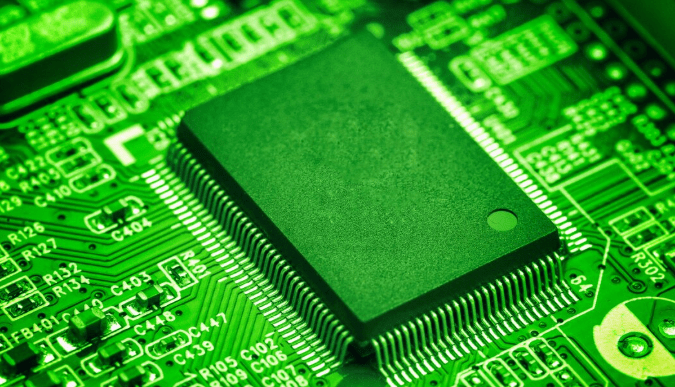
However, the most intriguing tale surrounding the H200 at the moment has very little to do with teraflops. While the chips are kept in warehouses, two governments are pulling in opposing directions.
The sale was approved by Washington back in December 2025. Lenovo and Foxconn were authorized as distributors, and about ten Chinese companies, including the well-known ones like Alibaba, Tencent, ByteDance, and JD.com, obtained licenses for up to 75,000 units each. Then Beijing did something that Washington didn’t seem to expect. It instructed its own businesses to invest more in domestic chips and to keep their Nvidia purchases concentrated on international operations. According to the US license, the H200 is limited to use within China. Beijing says it would prefer that those H200s not be used in China at all. There isn’t a version of this where everyone gets what they want.
Last week, Jensen Huang traveled to Beijing with President Trump. According to reports, Huang was added to the delegation at the last minute after Trump noticed that his absence was being reported in the media. Urgency was implied by the optics. The result pointed to a different conclusion. Later, US Trade Representative Jamieson Greer told Bloomberg that the bilateral agenda did not even include semiconductor controls. As usual, Trump stated that “something could happen.” Nothing did.
The thing that broke the silence is striking. DeepSeek confirmed that its most recent model had been adjusted to run on Huawei’s Ascend chips while diplomats were speaking. Chinese GPU supply is expected to gradually increase this year, according to Tencent’s chief strategy officer. The company’s in-house T-Head GPUs have reached scaled mass production, according to an Alibaba executive. These announcements weren’t coincidental.
As this develops, it seems as though the H200 has subtly evolved from a product to a symbol. Nvidia’s revenue from China has decreased to about 5% from over 20% prior to the tightening of export regulations. For this quarter, the company’s guidance is predicated on zero. That is impressive for a company whose chips were the standard in almost every serious AI lab in Beijing and Shenzhen just two or three years ago.
The risk that lies beneath all of this is difficult to ignore. Beijing is wagering that if Huawei and the domestic stack can close the gap quickly enough, locking out the H200 will appear wise rather than counterproductive. Nvidia is wagering that the lack of Chinese revenue won’t significantly alter the trajectory because the demand from the rest of the world is so enormous. Both might be correct. Both might be in error. The H200, the most costly paperweight in the history of modern computing, simply sits there, approved and frozen.
