

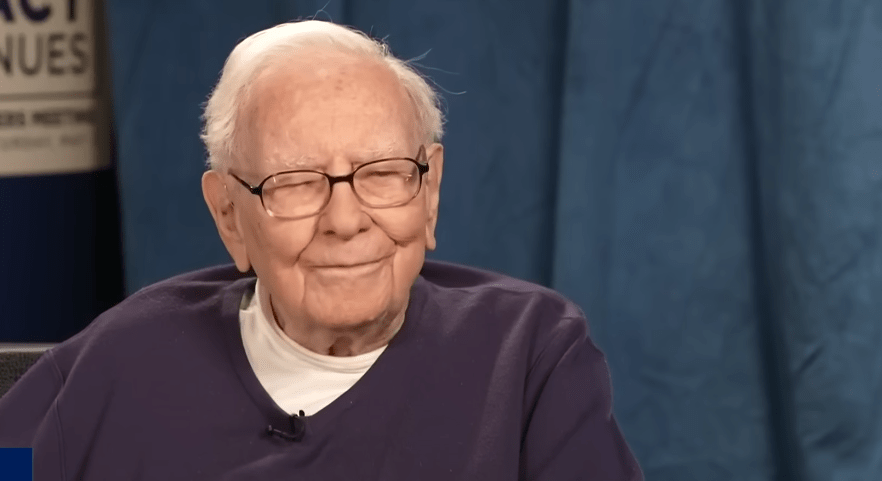
When you consider Berkshire Hathaway’s current portfolio, Warren Buffett’s investing legacy seems almost contradictory. With the discipline of someone who had been burned, or at least witnessed others get burned, the man avoided technology stocks for decades. When Bill Gates was still a close friend, he famously passed on Microsoft. During Google’s early years, he avoided the company. However, three businesses that are currently part of Berkshire’s $330 billion portfolio are either technology bets or AI bets, depending on your point of view. 28% of assets that have been invested. It’s not a footnote. It’s a conviction.
When you realize that Greg Abel is now the one making the calls, the story starts to feel very different. Following Buffett’s official handover of portfolio management responsibilities, Abel’s first quarter in charge made it abundantly evident to investors that he has no intention of gradually retreating from what Buffett established. He’s actually leaning more into it. Berkshire’s position at Alphabet, which it had been steadily increasing, was tripled. not doubled. tripled. Such a move is not an accident.
At about 21.4% of Berkshire’s invested assets, Apple continues to be the anchor. Buffett had already reduced the position from its highest point; at one point, it had grown to almost half the portfolio, which even he found unsettling. He acknowledged earlier this year that “I was not happy to have it be as large as almost everything else combined.” Whether it is comfortable or not, the investment has been outstanding. Since he began purchasing shares in 2016, the stock has subtly grown to be regarded by many as his best decision as a portfolio manager. Since then, Abel has indicated that Apple will not move forward. It may be a permanent core holding.
It’s not what most people anticipate that makes Apple an intriguing AI play. It has nothing to do with GPU clusters or data centers. Of all things, it’s about Siri. According to reports, Apple is working on a significantly redesigned voice assistant with true artificial intelligence built in. Hundreds of millions of iPhone users could experience upgrade cycles if that goes well, though it’s still unclear if Apple can pull this off after years of Siri’s poor performance. Revenue from services would come next. Although no one at the company expressly states it, that is the line of reasoning that Berkshire appears to be betting on.
Alphabet, which currently holds about 6.8% of invested assets, comes next. It’s worth pausing to consider how odd it is that Berkshire owns a sizable portion of Google’s parent company. Buffett once said he regretted not purchasing Google sooner. It appears that Abel has a different perspective on the AI search wars than Berkshire’s well-known cautious nature, as evidenced by his successor’s aggressive efforts to establish the position.
The steel company Nucor completes the trio with a meek 0.3%. Although its inclusion as a “AI stock” is a stretch in the conventional sense, the rationale relates to the unprecedented demand for structural materials being driven by the construction of AI data centers. Framing might be generous. However, there is a pattern in the way Berkshire considers the long-term consequences of investing in AI infrastructure.
There’s a feeling that something truly fascinating is taking place in Omaha at the moment. A subtle repositioning, one well-crafted press release at a time, rather than a revolution—Berkshire doesn’t do revolutions.
