


When you’re just one ring away from finishing your daily activity circle, an Apple Watch emits a unique buzz. It’s tiny, almost apologetic, but it does the trick. Millions of Americans have rescheduled their evening stroll to avoid that noise. It turns out that the same instinct is now being used, sometimes by the same companies, to determine whether you donate or vote.
The use of persuasive technology is not new. Long before anyone had a smartphone in their pocket, in the late 1990s, Stanford researcher BJ Fogg was writing about it. The reach has been altered. Almost without anyone noticing, the tools that taught a generation to pursue Duolingo streaks and Strava badges have found their way into the machinery of civic life.
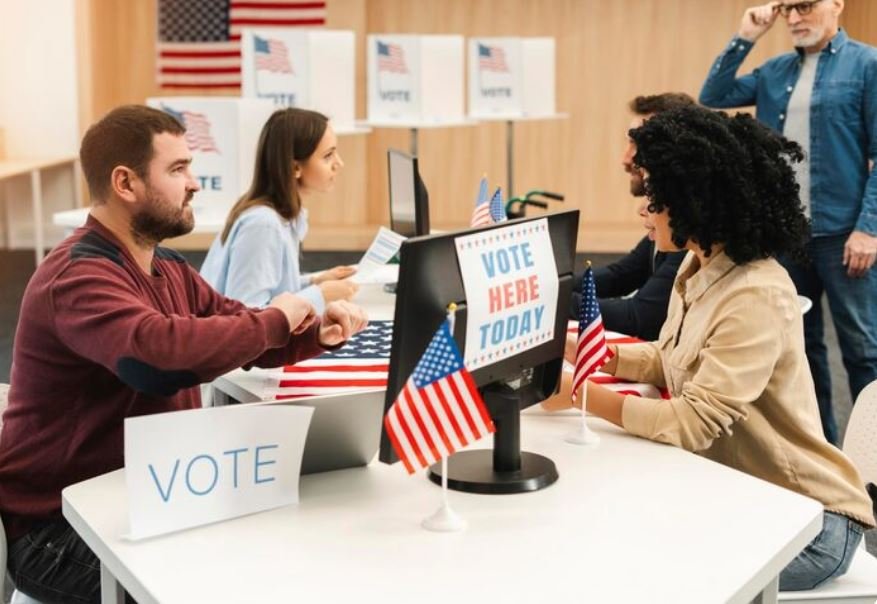
Consider casting a ballot. Fitness-app logic was directly borrowed by apps like TurboVote and Rock the Vote, which include minute-by-minute reminders, progress bars that indicate how close a state is to closing registration, and—this is the clever part—social proof messaging that informs you that your neighbors have already cast their ballots. “Your neighbor voted” outperforms “please vote” by a significant margin, according to studies on get-out-the-vote messaging. It has nothing to do with the election. It has to do with not wanting to be the one who failed to show up.
The same mechanics have been further emphasized by donation platforms. Pre-checked recurring-donation boxes are used by ActBlue and WinRed; most users never bother to uncheck them. It’s a minor design decision that has a huge impact on earnings, and it reflects what gyms and subscription apps have known for ten years: inertia is profitable. The same dopamine loop Peloton uses for its “100 Days of Cycling” badge has been added to charity platforms for recurrent donors.
Observing this develop, it’s remarkable how the three behaviors—giving, voting, and perspiring—have begun to share a single design vocabulary. Streaks and progress bars. Push alerts are scheduled based on behavioral cues rather than practicality. Within an hour of opening their phone on a Tuesday morning, a person may receive a step-goal alert, an election-day reminder, and a donation prompt—all of which are based on the same psychological framework.
That convergence does not sit well with everyone. For years, the Center for Humane Technology, which was founded in part by former Google design ethicists, has maintained that it is harder to distinguish between manipulation and helpful nudges than most users realize. There’s a legitimate question hidden there: is a habit-tracking app assisting someone in casting a ballot, or is it simply using the same persuasive techniques that keep users scrolling past midnight with a ballot box instead of a feed?
It’s also important to keep in mind that this isn’t completely safe. The 2016 Cambridge Analytica incident demonstrated how psychographic profiling, which is based on grocery loyalty cards, Facebook likes, and even toothpaste preferences, could be used to unsettlingly precisely microtarget political messaging. Persuasion designed for political gain and persuasion designed for positive habits frequently share the same underlying principles.
However, the benefits are so great that public organizations have begun purposefully borrowing it. The same “remove friction, default people in” strategy that fitness apps employ to prevent users from canceling is used by Oregon’s automatic voter registration system, which is linked to DMV visits.
Depending on who is asking, this could be viewed as a behavioral experiment involving 250 million people at once or as democracy receiving a much-needed software update. Voters’ reactions are still unknown, but it appears likely that they will eventually become aware of the trend.
