
There is a specific type of comic book character that refuses to vanish despite never quite fitting the beat of the major crossover events and never understanding the cover story. Among them is Cassandra Webb. Born on paper in November 1980, she entered Dennis O’Neil and John Romita Jr.’s The Amazing Spider-Man No. 210 as an elderly woman wired into a spider’s web-shaped life support chair. weird idea. Stranger perseverance. Forty-four years later, she’s the focus of a wiki page that reads almost like a warning about how stories change, a Sony tentpole movie, and a thousand internet jokes.
Scrolling through the different Madame Web entries reveals how much the character has been pulled in different directions. The original Cassandra has myasthenia gravis, is blind, paralyzed, and reliant on a device her husband made for her. She is a medium. A mutant with clairvoyance. A woman who is almost instantly aware of Peter Parker’s secret, which she casually shares with him in a manner more akin to a Twilight Zone episode than a superhero comic. For a supporting character, that’s a lot to bear, but the authors continued to find ways to bring her back.
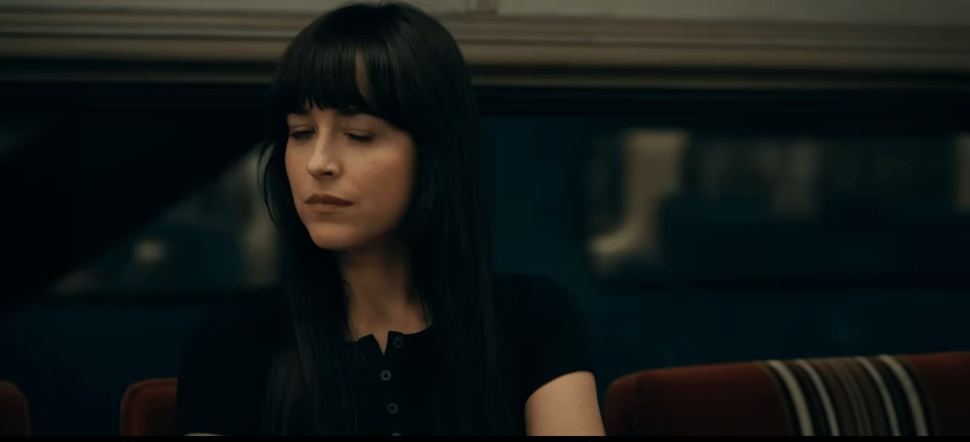
The majority of that was drastically altered in the 2024 movie, which starred Dakota Johnson and was directed by S.J. Clarkson. As a young paramedic in Manhattan, Cassie Webb worked alongside an unidentified uncle named Ben Parker on a beat that ultimately came into contact with three teenage girls who would go on to have Spider-related futures. It’s an odd choice that simultaneously moves the character forward in time and backward in age. The movie didn’t do well. The critics weren’t nice. It appeared to be viewed more as a meme than a film by viewers. And the comic version quietly persisted, unaltered, somewhere in the wreckage of its release.
Reading these wikis side by side gives the impression that Sony attempted to construct a franchise on flimsy foundations. The background architecture in the comics was always Cassandra Webb. She assisted Spider-Man in locating a victim of kidnapping. Fighting the Juggernaut almost killed her. She took part in an event known as the “Gathering of the Five,” a term that most likely requires a glossary and three footnotes. She was later killed by Sasha Kravinoff in the “Grim Hunt” plot, and Julia Carpenter inherited her abilities. Only comic book readers can take the sentence “Ben Reilly resurrected her in a clone body” without cringing. Then she fell victim to the Carrion virus once more.
When a character like this is thrust into a major role, you can practically feel the pressure. In the comics, characters like Mattie Franklin, Anya Corazon, Julia Carpenter, and Charlotte Witter orbit her like satellites. The movie attempted to compile some of that constellation into a single narrative. It wasn’t quite successful. However, it’s difficult to ignore the fact that the wiki entries continue to grow despite being cross-referenced, fan-edited, and expanding into areas that most readers never bother to look at.
Perhaps that’s the true lesson. Marvel’s lesser-known mystics tend to outlive their negative publicity. There are still supporters of the Joan Lee-voiced animated series version. Fans of the game still consider Susanne Blakeslee’s voice in Spider-Man: Shattered Dimensions to be a quiet favorite. Eventually, the movie will fade. Cassandra herself might say that the web never stops weaving.
