


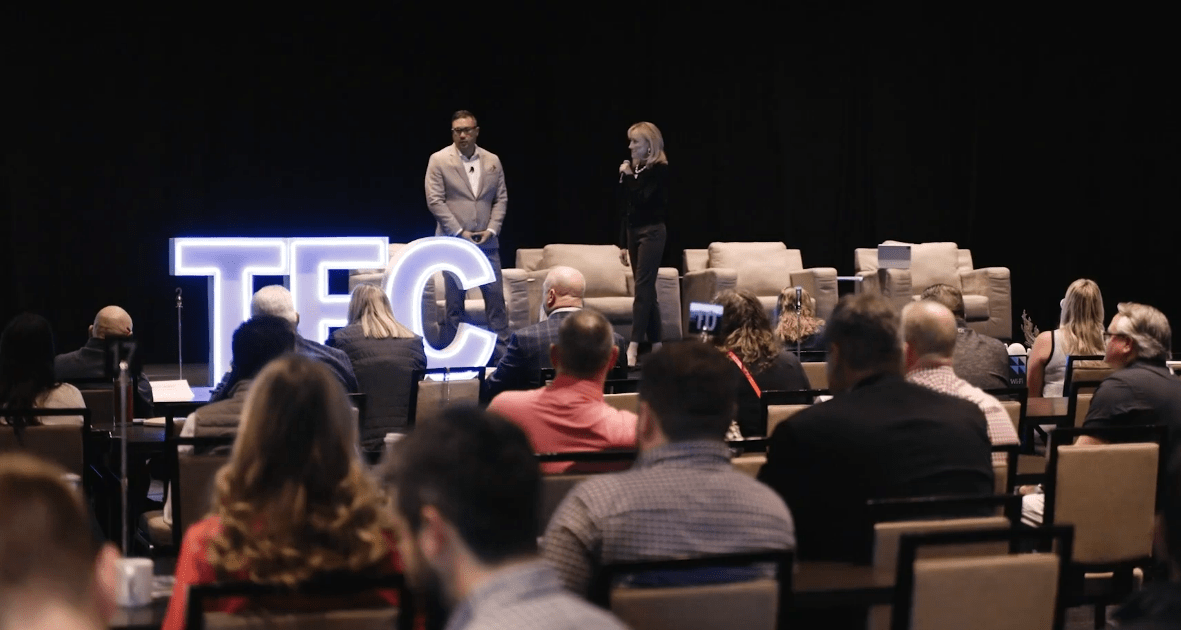
A group of researchers celebrated 20 years of researching digital persuasion at a five-star resort on the Mediterranean, but they discovered they had more questions than answers.
The light in Limassol in May has a unique quality; it is warm and sharp, reflecting off the harbor water in a way that makes everything appear a little more vibrant than it should. The city has a confident messiness that feels lived-in rather than planned, with fishing boats moored next to marina yachts and old churches crammed up against contemporary apartment buildings. The elegant and well-appointed St. Raphael Resort faces the sea and is located just east of the city center. It was the site of the three-day 20th International Conference on Persuasive Technology in early May 2025, and by most accounts, there was a clear sense of occasion. Anything in academia worth pausing over has twenty editions. It’s more difficult to determine whether the atmosphere was joyous or more nuanced.
The conference has previously taken place in this city, though not at this precise location. The fact that PERSUASIVE 2019 was also held in Limassol lends the 2025 return a somewhat circular feel, as if the organizers wanted to commemorate the milestone by returning to a familiar location. In just six years, the field itself has undergone significant change. Fitness apps and gamification design were major issues in 2019. By 2025, the program’s scope had grown to include questions about resilience, or how people and communities resist algorithmic influence rather than just give in to it, generative AI as a persuasion tool, counter-persuasion systems, and the identification of manipulative tactics in social media. Ten years ago, that final topic would have seemed a little strange at a conference on persuasive technology. It indicates the extent to which the discussion has progressed.
It’s difficult to ignore that this field has always held a unique position, with researchers sincerely attempting to create technology that improves people’s behavior while witnessing the same fundamental ideas being applied on an industrial scale in ways that unnerve them. This conflict was not avoided in the 2025 conference theme. In addition to privacy, trust, and ethics, the call for papers specifically addressed the humanizing and dehumanizing effects of persuasive technology. The community seems to have had enough of acting as though these issues are unimportant. They are no longer peripheral. They are the focal point.
The conference series is run by the Society for Persuasion and Technology, which currently has institutional affiliations in Qatar, Australia, Japan, Finland, Italy, and Canada. This truly global reach illustrates how the research has spread since the early Stanford days. The steering committee is chaired by Raian Ali of Hamad Bin Khalifa University in Doha, which is noteworthy considering how much of the current discussion surrounding digital influence is being shaped by scholars outside of the conventional Western tech corridor. Australia and Qatar provided the program chairs for 2025. Advisors from Sydney, Japan, and Arizona were part of the doctoral consortium. Compared to the first meeting in Eindhoven in 2006, this one appears different and is likely more sincere.
The main proceedings included twenty-three papers. The satellite events track revealed fifteen more. Personalized persuasion, theory and exploration, design and solutions, and emotions and behavior were the themes that were published through Springer. This seems to be a fairly clear summary of what the field considers most of the time. In keeping with the conference’s longstanding partnership with Taylor & Francis, extended versions of the best papers were invited to submit to the Behavior and Information Technology journal. It’s still unclear if that specific pipeline has the desired applied impact. Product roadmaps and scholarly journals don’t always communicate well.
The upcoming edition will take place at Future University Hakodate in Hakodate, Japan, a city on the northern tip of the nation’s main islands. It will be co-located with an activity and behavior computing conference. The organizers made wise decisions. A university with the word “future” in its name seems like a fitting venue for a conference that consistently returns to the same central query: what kind of future does this field genuinely hope to create? Twenty years later, the solution is still being worked on. It’s not a failure. It may be the most truthful aspect of it.
