


A common occurrence in many contemporary homes is that you mention, almost casually, that you’re cold, and the thermostat has already changed before you’ve reached for a blanket. It has a magical quality. If you sit with it long enough, it also feels like something completely different.
Customers were offered smart home appliances as convenience tools. easier mornings. safer homes. The kind of smooth domestic life that was previously limited to keynote presentations from tech companies. To be fair, some of that promise came to pass. Energy is saved by Nest thermostats. Porch pirates are captured by ring cameras. When your hands are covered in flour, voice assistants can set timers without your assistance. However, something subtly changed between the first smart speaker and the vast networked ecosystem of 2024. The house ceased to be merely a place to reside. It turned into a data-driven environment.
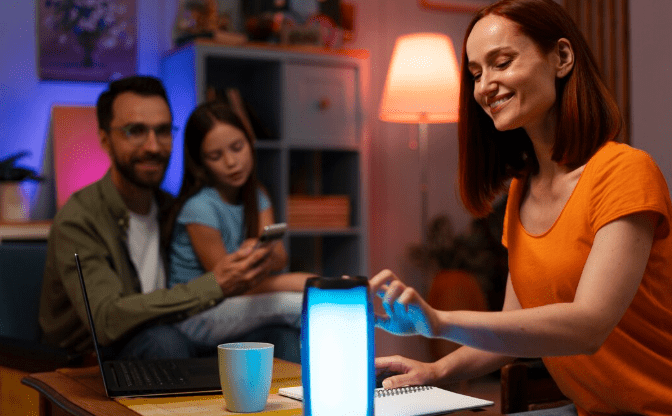
The extent to which corporate partnerships have altered the purpose of these devices is less discussed, and it may be purposefully left unclear. Businesses like Google and Amazon do more than just sell hardware. They market access to your daily routines, preferences, and patterns. It’s more than just a convenience feature when a gadget discovers that you regularly order the same brand of coffee on Thursday mornings, wake up at 6:40, and prefer the news over music. That’s a profile of behavior. Additionally, any advertising executive will tell you in private over drinks that behavioral profiles are extremely valuable.
A few years ago, about 28% of broadband households in the United States had at least one smart home device, according to research from Parks Associates. This percentage has only increased since then. The typical smart home user accumulates six devices instead of just one. Six things to listen to. six streams of data. Before a household fully understands its own desires, a corporate partner has six chances to learn about them. That is not cynicism. That is the business model’s architecture.
Many smart home companies sell hardware at a loss, relying instead on adding paid services later, according to industry analysts. In this version of razor-and-blade economics, the razor is a glowing cylinder that sits on your kitchen counter, and the blade is your attention. Mike Nefkens, the CEO of Resideo, freely admitted this, emphasizing that his business was unique in that it generated revenue from hardware. The implication is that since the actual product is downstream, most others don’t need to.
Many customers seem to have a hazy understanding of this and don’t want to face it head-on. Adoption has actually been slowed by privacy concerns. Not just privacy advocates were uncomfortable when it was revealed that human contractors were listening to audio clips taken inside people’s homes. When common people learned that a stranger may have overheard a fight they were having in their kitchen, something changed. Once that image takes hold, it is difficult to restore trust.
Convenience continues to prevail, though. It most likely will always do so. These platforms’ built-in persuasion isn’t coercive; it doesn’t have to be. A prompt product recommendation following the expiration of your coffee order. a gentle push alert when a promotion is being run by a partner brand. As this develops, it’s difficult to ignore how the smart home subtly shifted from being about your life to being about your consumption.
The participating companies take care to never put it quite that bluntly. They discuss enhanced user experience, seamless integration, and ecosystems. However, what they’ve constructed, piece by piece, is the most personal persuasion platform ever installed in a private residence, and the majority of people allow them to do the installation themselves.
