
By now, there should have been more breathing room. Well, that was the pitch. The time-consuming tasks of the job, such as scheduling, drafting, and sorting, would be handled by AI systems, freeing up workers’ time for more in-depth, important tasks. A professional exhale of sorts. The reality appears to be very different, at least for an increasing number of people.
Engineers are feeling even more worn out at the end of the day. The workload changed and multiplied, not because it vanished. In a widely shared post, Francesco Bonacci, the founder of a company called Cua AI, described it with unsettling precision: six worktrees open, four partially written features, two quick fixes that turned into rabbit holes, and a nagging feeling that he was completely losing the thread. “I end each day exhausted,” he said, “not from the work itself, but from the managing of the work.” For months, that statement has been subtly haunting discussions in the tech community.
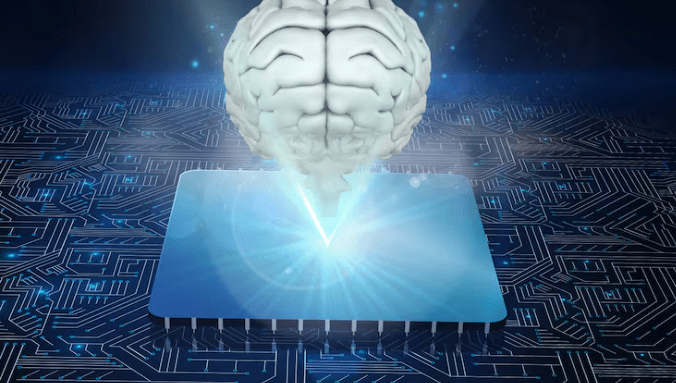
This sensation has been named “AI brain fry” by researchers at Boston Consulting Group and the University of California, Riverside. They characterize it as mental exhaustion brought on by using AI tools excessively and overseeing them beyond one’s cognitive capacity. For something that feels so visceral, it sounds almost too clinical. Naming it is important, though. It indicates that people are not dreaming.
The particular texture of the fatigue is what distinguishes AI brain fry from regular burnout. Conventional burnout is frequently caused by working too much for too long. This is a slightly different kind of attention saturation, where the sheer volume of concurrent demands overwhelms the brain rather than depth. It turns out that observing an agentic system perform several tasks at once is a type of cognitive labor in and of itself. “There’s really too much going on for you to reasonably comprehend,” stated one early user of Gas Town, an open-source platform that coordinates hordes of AI coding agents. He claimed that simply observing it move was a tangible source of tension.
Furthermore, some of the biggest tech companies’ incentive programs aren’t exactly beneficial. According to reports, Meta uses lines of AI-generated code as a performance indicator for engineers. Token consumption is being rewarded by other businesses as a stand-in for output. This implies that the pressure is inherent in the way performance is evaluated and is not merely cultural. increased output. Additional agents. greater supervision. It’s difficult to ignore the unsettling conclusion that that math leads to.
The information that is becoming available about errors is especially startling. According to reports, workers who were experiencing AI brain fry were making significant errors at a rate that was about 39% higher than those who weren’t. That’s a big difference. It implies that, under some circumstances, the drive for increased AI-assisted productivity may be subtly degrading the caliber of work it was intended to enhance.
It’s almost ironic that instruments meant to lessen cognitive load are now producing a whole new class of cognitive strain. The way businesses have framed the interaction between people and these systems may be the issue rather than AI per se. The employee is still not a collaborator. They have frequently taken on the role of a supervisor, overseeing agents, keeping an eye on outputs, keeping an eye out for mistakes, and switching between interfaces. That isn’t freedom from manual labor. That is simply an alternative form of it.
It’s really unclear where this will go from here. Better design, such as more intentional restrictions on agent sprawl and clearer interfaces, may significantly lessen the cognitive load, according to some researchers. Some are less hopeful, arguing that the issue is more deeply ingrained in our cultural definition of productivity. It’s safe to say that the exhale hasn’t arrived yet, regardless of the response.
