
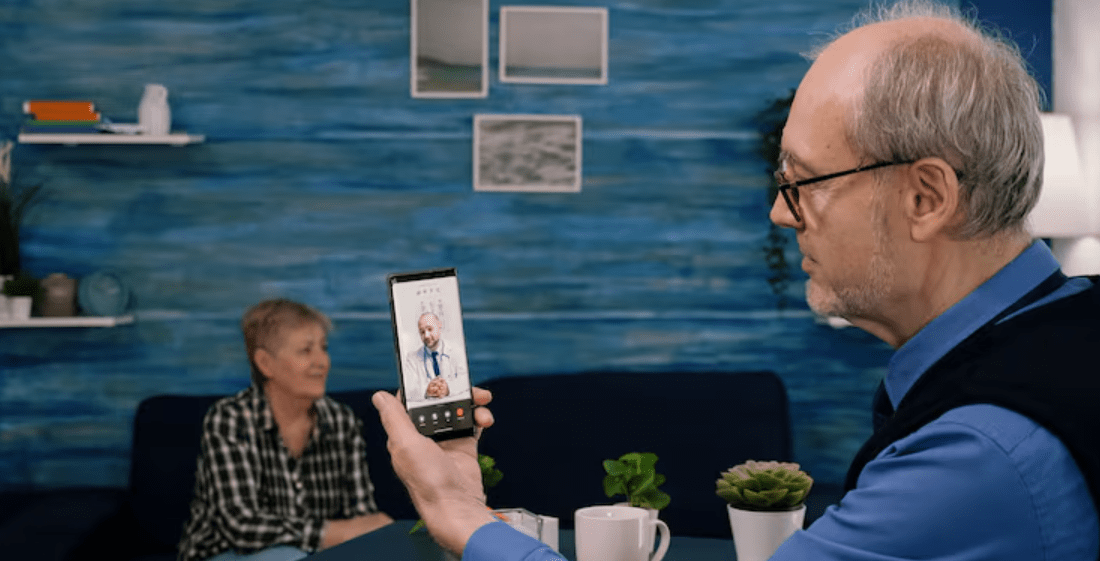
Last spring, at 2:47 in the morning, a smoking cessation trial participant sent a message somewhere in a Stanford research lab. She was not conversing with a therapist. She was not speaking with her physician. A piece of software that had been meticulously trained to sound like it cared was on the other end of the chat window she was typing into on her phone. The fact that she messaged at that hour did not surprise the researchers. It was that she continued to return. She had quit six weeks later.
These kinds of stories are beginning to accumulate, and they pose an unsettling question for an already overburdened healthcare system. The results of a recent scoping review, which compiled 43 studies on AI-powered text chatbots intended to encourage healthier behavior, have some quiet weight. Approximately 82% of the 120 comparisons had favorable results. That is a substantial amount. Hospital administrators, particularly those weary of witnessing coaching programs fail due to their own logistical burden, are startled by this kind of outcome.
There was nothing magical being done by the chatbots in these trials. The majority fell into one of two categories: on-demand assistants available when the user needed something, or regular coaches who checked in every day. Some did both. The personality that surrounds the technology seems to matter more than the technology itself. Goal-setting, feedback loops, social support, and cognitive behavioral therapy frameworks—all of which a competent human coach would employ—were heavily relied upon by the researchers. The bots, which were connected to Facebook Messenger and built on platforms such as IBM Watson or Dialogflow, seemed familiar. Some would say it’s almost too familiar.
Observing this develop gives the impression that the AI isn’t the main attraction. It has to do with access. Human health coaches are costly, dispersed, and worn out. They are frequently completely inaccessible to residents of lower-income neighborhoods. A chatbot doesn’t stop for lunch. When someone fails to check in for the third time, it doesn’t become irritated. The 2 a.m. text is not judged. Thus far, the evidence is genuinely encouraging for diet, stress, smoking, and physical activity. The picture is less clear when it comes to sleep, weight control, and alcohol consumption, in part because these topics have not yet been thoroughly researched.
However, to interpret this as a clear win for the machines would be incorrect. In a different study, seventeen licensed therapists handling the same scripted mental health scenarios were compared to general-purpose chatbots similar to those consumers currently use. In the most important areas, the therapists emerged victorious. They posed more insightful follow-up queries. They asked for more details. In contrast, the chatbots relied heavily on reassurance and unsolicited advice—the conversational equivalent of a friend who consistently assures you that everything will work out without ever asking what’s truly wrong. That gap quickly becomes dangerous during a crisis.
Thus, the resulting image is divided. The chatbots are quietly demonstrating their ability to coach people fairly well. Those who are truly ill, particularly in mental health emergencies, are not prepared, and acting otherwise puts them at serious risk. The majority of the evidence is still preliminary and exploratory because only about one-third of the studies in the review were randomized controlled trials. Most of the time, effect sizes were at best moderate. Long-term results are still unknown.
Even so, it’s difficult to ignore the direction that things are going. Health systems are keeping an eye on things. Insurance companies are keeping an eye on you. The fact that a good enough chatbot at scale might end up doing more quantifiable good than a smaller number of excellent human coaches reaching nearly nobody is something that no one quite says aloud. It’s still very much up for debate whether that’s a future we should strive for or one we just walk into.⁖※
