


There are no windows in the briefing room. Every time I consider what it would be like to make a targeting decision in 2025, isolated from the weather, noise, and the real world, while an AI system silently reduces your options to a shortlist and calmly and statistically confidently informs you of which option makes the most sense, that detail keeps coming to mind. The person seated at that terminal might still think they have the final say. Perhaps they are. However, the distinction has become so hazy that even the Pentagon is unsure of its exact location.
Earlier this year, the conflict between the Defense Department and Anthropic came to light, revealing something that military analysts had been speculating about for some time. Anthropic requested that the Pentagon refrain from using its AI model, Claude, in fully autonomous weapons, which are devices that are capable of identifying and firing on targets without the need for human input. Additionally, the company sought guarantees that Claude would not be used to monitor Americans by purchasing financial and commercial location data in large quantities. After rejecting both requests, the Pentagon completely blacklisted Anthropic, calling the business a “supply chain risk.” Anthropic has filed a legal challenge to the action.
As this plays out, it seems like the military was caught off guard. According to reports, Claude was a part of the Pentagon’s operations against Venezuela, which included the January capture of Nicolás Maduro. Claude is more than just a chatbot; it’s a foundation model that can simulate combat situations, synthesize intelligence, and produce target analysis on a scale that would require weeks for human analysts. That is a really helpful capability. Additionally, it can be genuinely frightening depending on how it is used.
A large portion of this issue revolves around the Maven Smart System. Maven, which has been in development for ten years, combines data from social media, military drones, commercial brokers, and satellites to identify individuals and objects of interest.
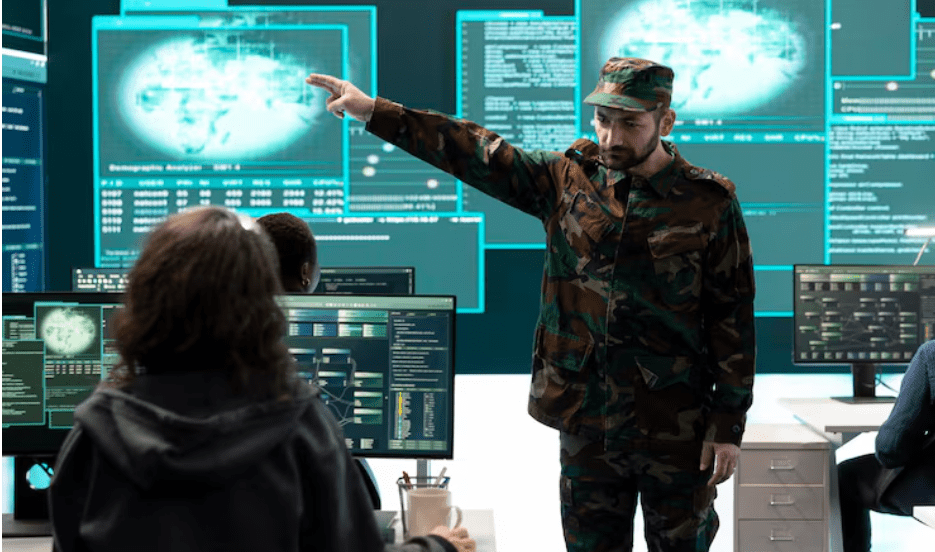
It also incorporates Claude to speed up the analysis. The principal contractor is Palantir. Iran, Iraq, Syria, Ukraine, and Yemen have all employed the system. In clear conditions, Maven’s algorithms identified a tank correctly about 60% of the time in 2024. Accuracy fell to 30% in the snow. For a system that makes deadly decisions, these figures are not encouraging.
This is the point at which persuasion becomes a significant issue. Models of foundations are fluid. They use the same confident, readable prose for their incorrect conclusions as they do for their correct ones. Fluency becomes a liability in the stress of active conflict, when commanders demand speed and analysts process hundreds of targets. According to research on the Israeli military’s use of AI-generated targeting recommendations in Gaza, analysts were frequently too hurried to thoroughly confirm the system’s recommendations. Nobody was coerced by the algorithm. It simply made the incorrect response seem plausible.
Since 2016, the Pentagon has spent at least $75 billion on AI-driven initiatives; however, the true figure is probably much higher when classified initiatives are taken into account. In 2025, Palantir and Anduril both reported their highest-ever yearly defense revenues of more than $900 million. With little assistance from humans, Anduril’s autonomous drones are capable of navigating hazardous environments and possibly engaging targets. In 2026 alone, the Pentagon requested $13.4 billion for autonomous weapons systems. These are substantial wagers.
There are very few safeguards. Some guardrails were established in a 2024 National Security Memorandum, but agencies are free to waive them whenever they become a hindrance to operations, which is exactly when the guardrails would be most important. Systems that fire without human input are not prohibited by the Pentagon’s own autonomous weapons directive. It merely inquires as to whether “appropriate levels of human judgment” were applied at some point during the larger procedure.
