


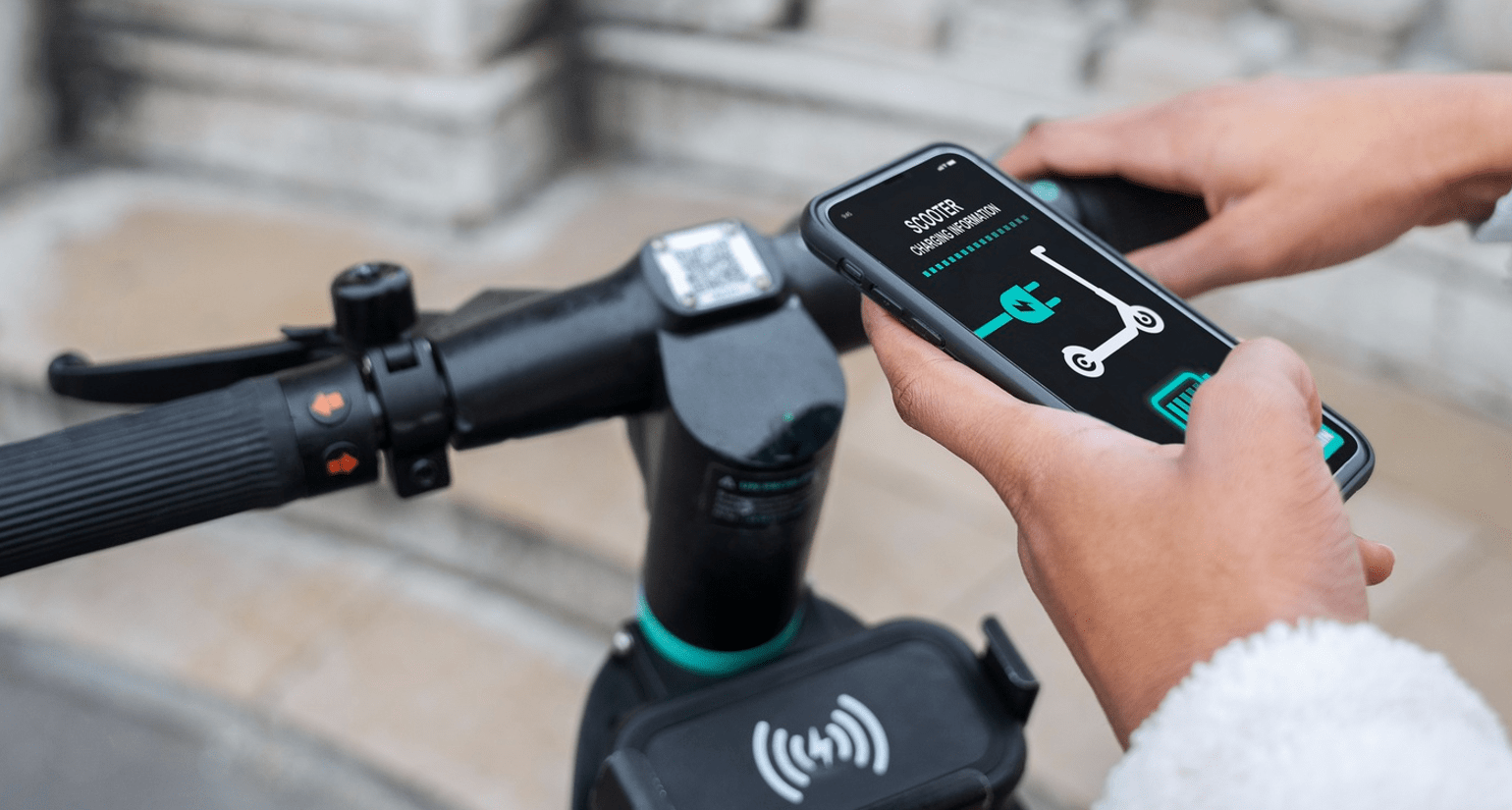
For ten years, researchers at MIT and affiliated institutions in Europe have been investigating whether a person can be persuaded to choose a bike over a car by the appropriate digital cue at the appropriate time. Most cities are unaware of how encouraging the results are.
In 2015, 239 workers from fourteen companies in the Greater Boston Area opened an app and began tracking their commutes on a fall morning in Boston. They were able to view their ranking in relation to their peers. Over the course of six weeks, they could observe how company rankings changed as participants chose to pedal in or take the T rather than drive. It was intended to be a social competition, and it was so successful that 15% of all participants increased the frequency with which they rode their bikes to work. That percentage increased to 30% among those who already occasionally rode bikes. The study, known as the Biking Tourney, was conducted by the Changing Places group at MIT Media Lab in association with the Austrian Institute of Technology. It wasn’t very big. However, the reasoning behind it—that people behave differently when they can see themselves in relation to others and feel the slight pressure of a community observing—has since grown to be one of the more researched mechanisms in the field of sustainable transportation.
The Persuasive Urban Mobility project was born out of a simple realization: current transportation systems, especially those that relied on cars, would not be able to reduce carbon emissions or urban congestion on their own. Infrastructure upgrades are beneficial. Price signals are useful. However, neither deals with the everyday choice that occurs when someone grabs their car keys at seven in the morning without giving it much thought. That choice is a habit, and habits react differently to pressure than does policy. The MIT research group, led by Agnis Stibe and Matthias Wunsch alongside Kent Larson, focused on identifying the specific persuasive strategies — social comparison, gamification, goal-setting, peer pairing — that reliably shift mobility choices without coercion. For them, the distinction is important. Persuasive technology modifies behavior through influence rather than coercion, according to the project’s published work. What that means in practice is that the app suggests, the leaderboard nudges, and the Bike Buddy who rides alongside a nervous first-time urban cyclist is a volunteer — but the system is designed to make all of it feel like a natural choice.
It is worthwhile to take a look at the Bike Buddy program. It matched experienced cyclists with people who wanted to start biking in the city but were held back by safety concerns — one of the most commonly cited barriers in the research literature. An experienced rider would organize a joint ride, show a new cyclist the quieter routes, stay alongside them through the trickier intersections. The experienced rider got a rewarding experience through helping someone in their community. The new rider got, potentially, a changed commute. The technology facilitated the pairing; the human relationship did the actual persuading. It’s a less efficient model than an app notification, but the evidence suggests it produces more durable behavior change.
Parallel research at the National Technical University of Athens, led by Evangelia Anagnostopoulou and colleagues, ran twelve-week pilots in Vienna, Ljubljana, and Birmingham, embedding persuasive design elements into a route planning application. The approach was notably granular: the system distinguished between leisure trips and commutes, applying more assertive nudges to leisure journeys on the grounds that time pressure is lower and people are more open to a scenic detour via bicycle or a bus that adds ten minutes. For commuting, the strategy was gentler — nudging toward slight improvements on existing behavior rather than radical shifts. Someone who sometimes combines driving with public transit is an easier target for behavior change than someone who drives everywhere. That sounds obvious, but a lot of earlier persuasive transport systems had simply pointed at an ideal mode and hoped.
Transport accounts for roughly twenty-five percent of global energy consumption and carbon dioxide emissions — a number that has been cited in this field of research so many times it has started to feel abstract. It’s not abstract. It is concrete in the form of particular streets in particular cities, choked with single-occupancy vehicles on Tuesday mornings, accumulating emissions that nobody individually chose but everybody collectively produced. The Persuasive Urban Mobility project frequently asks whether behavioral science built into technology that most commuters would hardly notice can be used to close the gap between what people do and what they might choose under slightly different conditions at scale. As these systems grow to millions of daily users, it’s still unclear if the modest effect sizes found in controlled studies will hold up. However, the direction appears to be correct. The cities that have begun to take notice of this research—and an increasing number of them have—are not waiting for the answer to that question.
